Blog

  • Yahweh a Pagan Deity (The Moon God)

    Yahweh a Pagan Deity (The Moon God)

    Reading Time: 6 minutes

    بِسْمِ اللَّهِ الرَّحْمَنِ الرَّحِيم

    It is interesting how Non-Muslims always attack the name of Allah saying it is a moon god even though they don’t have not a shred of proof from Quran or the Hadith. In this article i will only quote Non-Muslims sources to prove that Yahweh / YHWH / Jehovah or whatever the name Christian God have is a Moon God and Pagan God.

    Here we go :

    NO.1
    Lyon D,George Ed.Moore and George Foot are joint wrote in this book a book Studies in the History of religions on page 194,
    “another theory that has found advocates in the recent years is that YHWH was a MOON GOD”,

    NO.2
    Ralph Ellis in his book Tempest and Exodus writes
    “thus the old testaments primary name for God was probably derived from the MOON GOD of EGYPT”

    NO.3
    John H. Hayes writes in his book – “Introduction to the Bible”,he wrote :
    “What ever the Orignial name of the name Yahweh may have been and this may continue to remain Unknown.”

    NO.4
    James M.Efird in his book The old testament writings page 35 writes,
    “Exactly what does the name Yahweh means?. Once again there is no absolute answer which can be given for the origin of the name is lost in the recesses of the past and scholars differ in their assessment of of its meanings”

    NO.5
    Dr.Reckart a Christian believes and shows evidence that Yah / Yahweh / Yashua are all pagan. Read his blog there is link there for you to find more info :

    Dr G.Reckart says that the name “Yah” came from the Pagan Egyptian Moon God. He writes :
    “This pagan “Yah” idol was not the original God of the Jews. This “Yah” idol is not the God of creation. This “Yah” idol is not the God Abraham believed in and it was counted to him for righteousness. This “Yah” idol is a Baal god and the sooner we acknowledge this the quicker the Jews can return to the true God and let him heal their sins.”

    “Yah” from a certain Dr G. Reckart. It says the following about this – to me! – obscure god :

    “One of the false gods the Jews worshipped was “YAH”. This pagan idol has its roots in Babylon and Egypt. This is the lunar or moon god. In Babylon the moon god is called Ia or Ya. It has both a female and a male identity. In Egypt the Babylon female “Ia” or “Ya” was changed into a male god and the female god was named “Shua” and made the sky god. When a person then combines these forms into “Iashua” or “Yashua”, they have made the moon god, the sky god. This Babylonian/Egypt deity is also called Baal throughout the Scriptures. Th Jews did worship the moon god when they apostated into idolatry from the true god Ehyeh asher Ehyeh (Elohim/Adonai). This moon god also has the name of Thoth.”
    Source :
    – http://yahwehism.com/yah-god.html

    Further more Dr G, Reckart comments on Friedrich :

    Friedrich Delitzsch proved that the name of the god YA / YA-VE / YA-U (YHVH YA-HU) existed in Babylon as far back as 2500BC. The confusion arises when scholars attempting to justify the Israelite use of Ya and make this god the God of the Jews, try to make this deity a Jewish one and not one from a foreign and pagan people. This then saves the Jewish Yhvh from being a pagan idol. The fact remains, even if scholars pervert the evidence: there was no Abraham in 2500BC. There was no Israelite people. There was no nation of Israel. Any adoption of the Yagod must then come from prior centuries.
    – http://jesus-messiah.com/html/ya-god-origin.html

    NO.6
    David Icke writes in his link :

    “Yahweh,the Fraud of Israel. The Midian-Egyptian connection to the origin of Yahweh / Yah a Moon-god. In its earliest attestations the name Yah refers to the moon as satellite of the earth. Yah then becomes conceptualised as a lunar deity, iconographically anthropomorphic but whose manifestations, from the hieroglyphic evidence, can include the crescent of the new moon, the ibis and the falcon- comparable to the other moon deities, Thoth and Khonsu.”
    Source :
    – http://www.davidicke.com/forum/showthread.php?t=110551

    YAHWEH HAD A WIFE

    NO.7
    In year 1967,Raphael Patai was the first historian to mention that the ancient Israelites worshiped both Yahweh and Asherah.

    NO.8
    George Hart IN HIS BOOK – “A Dictionary of Egyptian Gods and Goddesses”,mentions that “YAH is a MOON GOD of the Egyptians.

    NO.9
    William G. Dever said Yahweh had a consort Asherah some even go to say that Asherah was Yahweh’s wife.
    Source :
    – https://www.jstor.org/stable/1357073

    In fact, the Israelites were still very much polytheistic here, and they still adored Asherah as the Mother of Heaven, or the consort of El, El Elyon, or Yahweh. It wasn’t until around 600 BCE did we have Monotheism start taking root by strict Yahwists and reformists, and where Ahserah was seemingly edited out of the bible as Yahweh’s consort. It is here where Yahwism became monotheistic and considered all other GODs as false idols to which included Asherah.

    NO.10
    Professor Bill Dever, discusses archaeological evidence for Asherah as the consort of Yahweh :
    Asherah was, of course, finally driven underground by the reformist parties that :edited the Hebrew Bible. In its final form she is written out of the text. Hence, she :disappeared and all her cult imagery with her when Jewish monotheism at last :triumphed in the period after the Israelites returned from the Babylonian exile. :But Asherah was once alive and well; modern archaeology has in fact resurrected :her. Her “houses,” now vacant, were once occupied. Here she was “at home” for :many of the masses in ancient Israel.

    We can also reference The Early History of God Yahweh and the Other Deities in Ancient Israel, by Mark S. Smith in where he explains the history of Asherah as well as how the name Asherah eventually morphed into a generic term essentially meaning “post,” or “idol” that was to be worshiped toward a specific god.
    Source :
    – https://www.eerdmans.com/Products/Default.aspx?ISBN=9780802839725

    NO.11
    The Oxford Companion to World Mythology states :
    “It seems almost certain that the God of the Jews evolved gradually from the Canaanite El, who was in all likelihood the ‘God of Abraham’… If El was the high god of Abraham – Elohim, the prototype of Yahweh – Asherah was his wife, and there are archeological indications that she was perceived as such before she was in effect ‘divorced’ in the context of emerging Judaism of the 7th century BCE (2 Kings 23:15).”
    Source :
    – https://books.google.de/books?id=kQFtlva3HaYC&pg=PA118&hl=de#v=onepage&q&f=false

    NO.12
    French epigrapher André Lemaire in his article “Who or What was Yahweh’s Asherah?” published in the Nov.-Dec. 1984 issue of Biblical Archaeology Review, an inscription found at Kuntillet ‘Ajrud (dated between 850 and 750 BCE) states the following :
    “I bless you through Yahweh of Samaria, and through his Asherah! Another inscription, found at ‘El Qom, from the same time period, reads: Uriyahu, the king, has written this. Blessed be Uriyahu through Yahweh, and his enemies have been conquered through Yahweh’s Asherah. Asherah is the name of the Canaanite mother-goddess whose worship is expressly forbidden in such Biblical passages as Deuteronomy 16:21 (consistently rendered “grove” in the King James Version). Clearly, Yahweh’s name was misappropriated and corrupted by heathen worshippers.”

    NO.13
    Roger Hathaway IN HIS BOOK – “sacred name of God or blasphemy?” :
    “There is evidence that Yahweh had been the Edomite’s lord as far back as 1,400 BC. The oldest known appearance of the name YHWH outside the Holy Land was in Egypt about 1,400 BC where it is found on lists with five other sacred names. A Rameses II (1304-1237) list has it 6 times. In an Amon temple of AmenhotepIII (1417-1379 BC) the name is associated with Seir (Edom).”

    NO.14
    Norman Walker says the Egyptian origin for the Tetra Grammaton saying that the first half ogf the divine name YAH, comes from the Egyptian I-H “MOON” GOD and the second part of WEH comes from the Egyptian ipithet “one” (cf. Ikhnaten’s naming of the SUN DISC “the GOD-ONE 16.
    [Norman Walker “Yahwism and the divine name YHWH, ZAW (1958): 262-265; The Tetragrammaton (west ewel, England. 1948, espcc, pp.10-14]

    NO.15
    Roth in his book – “Die Aegypt. und die Zoroastr. Glaubenslehre, 1846 page 175” derives the Hebrew name [Yahweh] from the ancient moon-god Ih or Ioh.
    Source :
    – http://islamiat101.blogspot.com/2012/12/yahweh-pagan-deity.html?m=1

    CONCLUSION
    We have analyzed, and analyzed with proves that Yahweh is a Pagan God.

    Jesus Christ pbuh said :
    “If you hold to my teaching,you are really my disciples. Then you will know the truth and the truth will set you free.”
    [John 8:31-32]

    Muhammad pbuh said :
    “Speak the truth even if its bitter.”
    [Saheh Hadith Al-Bukhari and At-Tirmizi]

    Allah Azza’Wa’Jalla The One and Only God Almighty said :
    “The truth has come and falsehood has vanished. Indeed,falsehood is bound to vanish.”
    [Al-Isra’ 17:81]

    “Indeed,the religion in the sight of Allah is Islam. And those who were given the Scripture did not differ except after knowledge had come to them – out of jealous animosity between themselves. And whoever disbelieves in the verses of Allah, then indeed, Allah is swift in taking account.”
    [Ali-Imran 3:19]

    “And whoever desires other than Islam as religion – never will it be accepted from him, and he, in the Hereafter, will be among the losers.”
    [Ali-Imran 3:85]
  • Perfection and unmatched eloquence of the Noble Quran.

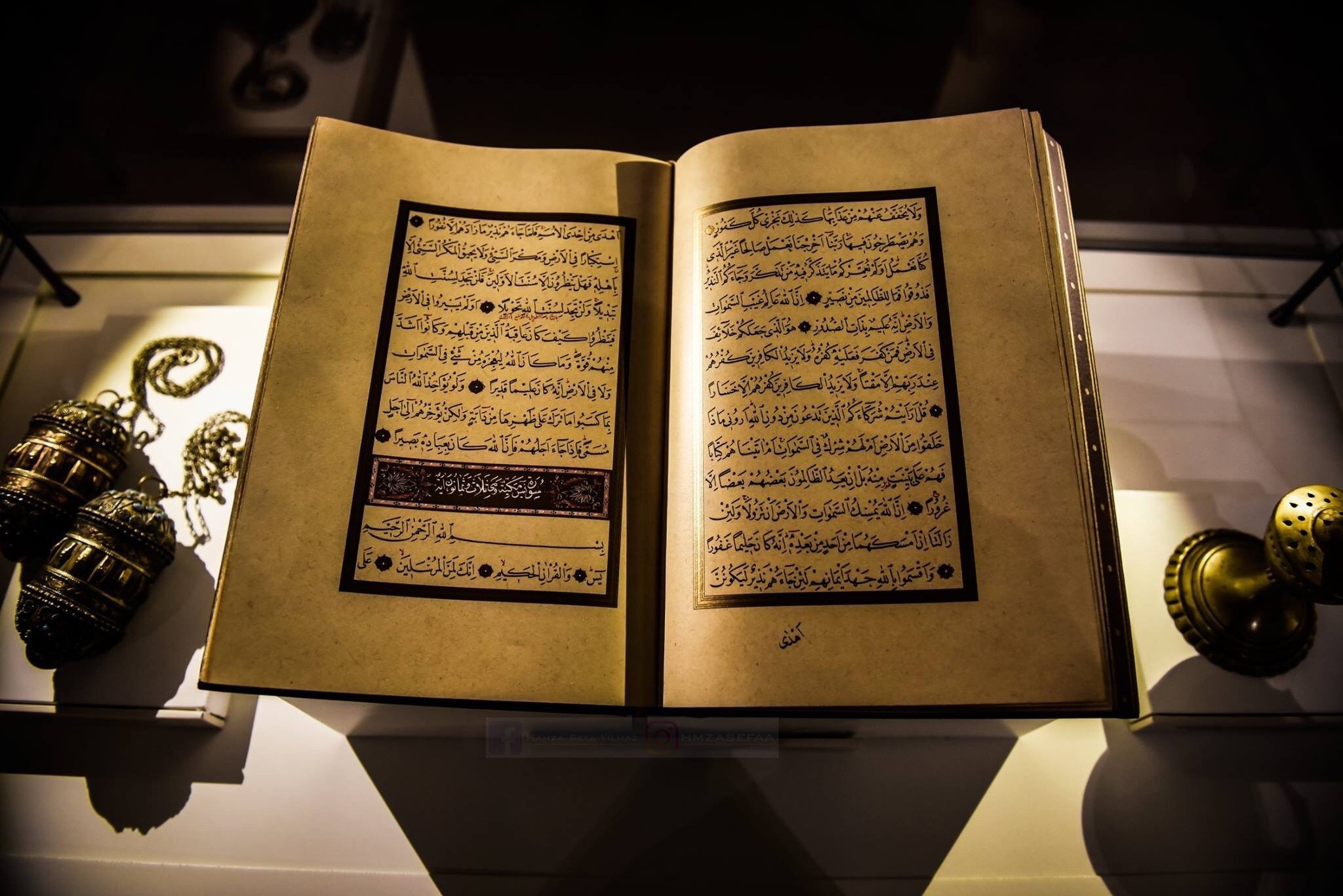
    Perfection and unmatched eloquence of the Noble Quran.

    Reading Time: 6 minutes

    بِسْمِ اللَّهِ الرَّحْمَنِ الرَّحِيم

    The first audiences of the Qur’an were the desert-dwellers of Arabia,who were proud of their language skills. Their material possessions were meager but their language was far in advance of their culture. They earned their livelihood by trading and took many trips abroad to buy and sell goods. Their long journeys across the desert provided them the time to ponder about nature, and the order of the nature of things. They were very meticulous in their choice of words, and very specific in their speech.

    They adored oratory and diction and effective communication. They were skillful in the articulation of finer thoughts, and quite adroit in their expression of ideas. Words were their wares, and eloquence was their fetish and forte. Communicating finer thoughts in the finest form was their obsession. Composing poetry and prose was their passion. They vied each other in their ability to be fluent and eloquent. They produced elegant literature of high quality even though the subjects they chose were mostly petty and profane. They squandered their skills in embellishing the tales of their tryst, their amorous exploits and adventures, the exaggerated and boastful accounts of their valor in warfare, and the virtues of their wine and women. Their written literature was scanty, but they had a prolific memory and committed thousands of quotes, anecdotes and poems to memory. Their literature was passed along to subsequent generations by oral traditions. So proud were they of their diction and eloquence that they declared themselves to be the masters of the language, and others to be deprived of the faculty of speech. Compared to theirs, other languages were merely the crude communications of inarticulate mute men. They referred to all non-Arabs as Ajams,those suffering from a speech impediment.

    When the Arabs first heard the Qur’an,they were awe-struck by its eloquence and listened in amazement. Never before in their life had they heard such a stunning and stately sermon. Their instincts convinced them that such a noble and impressive discourse could only be a divine diction, not a human creation. It was far more sublime and solemn than all their literature put together. The Qur’an proclaimed that it was not a man-made composition, and challenged its audience to present any composition that matches its style and elegance. It declared that humans would fail to produce a single composition to match its caliber even if they joined hands and converged and coordinated their efforts. It threw the gauntlet :

    “And if you are in doubt about what We have sent down upon Our slave (Muhammad),then produce a Surah the like thereof and call upon your witnesses other than Allah if you should be truthful.”
    [Al-Baqarah 2:23]

    The expert composers of Arabia heard the dare but could not come up with an answer. Compared to the Qur’an their literary endeavors appeared clumsy and childish. They felt like they were inexperienced novices. The distinguished and prolific poets seemed immature. The enthusiastic orators found themselves at a loss for words. They were humbled and humiliated by the words of the Qur’an. The masters of the Arabic language failed to find any flaw or lapse in the language of the Qur’an. They acknowledged defeat and expressed their inability to match it. Many were so mesmerized by its message that they embraced Islam right there and then. The internal evidence of the Qur’an is enough to dispel doubts. When one reads it,it becomes clear that no man could have written it.

    Man is the subject of the Qur’an. It narrates the story of man as an integral whole, and it describes all the stages of man’s journey to his ultimate destination,his birth,life,death,resurrection,the judgment of his deeds and depending upon the judgment heaven or hell. In this temporal and physical world,the observation and experience of man is restricted to his birth, the trials and tribulations of his life and his death. His five senses do not enable him to perceive an existence beyond the confines of this physical world. The eyes do not see light emanating from the other world, and the ears do not detect sounds from the other side. The hands cannot feel,the nose cannot smell and the tongue cannot taste anything that is not of this world. The mind therefore fails to perceive the presence of the world beyond.

    The great beyond lies past the borders of death. Resurrection,the judgment of deeds and heaven and hell are events scheduled to take place there. Fluently and poignantly and with an aura of confidence, the Qur’an describes these events in detail. It narrates with the knowledge of certainty. It discusses the events of the other world with the same ease and eloquence as the events of this world. Ever since it was first revealed its diction and eloquence remain unsurpassed not only in Arabic but also in all languages of the world. The challenge still stands,any humans will never be able to match its literary quality.

    The difference between the Qur’an and the work of the poets, writers and philosophers is not only that of degree or quality but also that of character and class. It did not stoop down to the earthy model of distortion and dishonesty. Rather,it aggrandized and sanitized the standards of literature, and introduced it to a new height. It imposed a tougher requirement for literary standard and demanded absolute honesty and accuracy. It refused to espouse fiction and the art of fictionalizing facts, and spurned exaggeration. It did not win by using the ways and means of the other literary works.

    The literary giants know the rules of grammar and diction. Yet, they cannot comply with the rule laid down by the Qur’an. They are handicapped because their expertise is of no avail without falsehood and fiction. If exaggeration was to be edited out of their work, they would not be left with much of their work. They cannot imagine poetry without a degree of lies and embellishment. Thus the Qur’an unfettered the facts and liberated the truth from the clutches of its captors – the poets,the writers and the philosophers of the past, present and the future. It exposed their craftiness. When it comes to matters pertaining to this world,they do know the facts but do not always choose to be honest and accurate. However, when it comes to matters past the grave,they are actually the charlatans relying on guesses and conjectures.

    “And most of them follow not except assumption. Indeed,assumption avails not against the truth at all. Indeed,Allah is Knowing of what they do.”
    [Yunus 10:36]

    “And if you obey most of those upon the earth they will mislead you from the way of Allah. They follow not except assumption and they are not but falsifying.”
    [Al-Anam 6:116]

    Many other non-Muslims have also confirmed the Quran’s unmatched eloquence. Hamilton Gibb,the famous University of Oxford Arabist said :
    “the Meccans still demanded of him a miracle, and with remarkable boldness and self confidence Mohammad appealed as a supreme confirmation of his mission to the Koran itself. Like all Arabs they were the connoisseurs of language and rhetoric. Well,then if the Koran were his own composition other men could rival it. Let them produce ten verses like it. If they could not (and it is obvious that they could not),then let them accept the Koran as an outstanding evident miracle.”
    [HAR Gibb : Islam – A Historical Survey 1980,Oxford University Press page 28]

    Alfred Guillaume wrote:
    “The Qur’an is one of the world’s classics which cannot be translated without grave loss. It has a rhythm of peculiar beauty and a cadence that charms the ear. Many Christian Arabs speak of its style with warm admiration, and most Arabists acknowledge its excellence. When it is read aloud or recited it has an almost hypnotic effect that makes the listener indifferent to its sometimes strange syntax and its sometimes, to us, repellent content. It is this quality it possesses of silencing criticism by the sweet music of its language that has given birth to the dogma of its inimitability. Indeed it may be affirmed that within the literature of the Arabs, wide and fecund as it is both in poetry and in elevated prose,there is nothing to compare with it.”
    [Alfred Guillaume : Islam – 1990 (Reprinted),Penguin Books pp.73-74]

    Orientalist Author – Arthur Arberry,who studied and became fluent in the Arabic language while studying in Egypt recognized the beauty of the Qur’an. He said:
    “the rhetoric and rhythm of the Arabic of the Qur’an are so characteristic, so powerful AND so highly emotive,that any version whatsoever is bound by the nature of things to be but a copy of the glittering splendor of the original.”
    [Arthur Arberry – The Koran Interpreted page 24]

    The Qur’an defied the accepted norms of literature and achieved eloquence and eminence without resorting to exaggeration of any sort. Because of that,every literary classic created in any period of history and in any language of the world, would fall in a class lower than that of the Qur’an. It has a unique character all its own. It lays down facts plainly and meticulously adheres to accurate narration. Even when it quotes a parable,the comparison is never misleading and it does not twist or bend the truth. The words and phrases it uses bring out the unadulterated truth. It is sworn to tell nothing but the truth. Precision is its priority and all of its text can be accepted literally. Scientific treatise should be that exact. Its adherence to accuracy when it comes to matters pertaining to this world infuses faith and confidence into its believers. They become convinced that the events scheduled to occur beyond death are also depicted with the same accuracy and precision and without exaggeration. The reason the Qur’an has remained matchless in substance and style is because it is the absolute truth. About itself, it says :

    “These are the verses of Allah which We recite to you (O Muhammad) in truth. And indeed,you are from among the messengers.”
    [Al-Baqarah 2:252]

    “He has sent down upon you (O Muhammad) the Book in truth,confirming what was before it. And He revealed the Torah and the Gospel.”
    [Al-`Imran 3:3]

    It is a miracle in itself that for over 1400 years,this challenge to match the Quran’s is still stands unmet today despite many failed attempts to do so.

  • Original name : Eesa (Isa) or Jesus?

    Original name : Eesa (Isa) or Jesus?

    Reading Time: 2 minutes

    بِسْمِ اللَّهِ الرَّحْمَنِ الرَّحِيم

    إِذْ قَالَتِ الْمَلَائِكَةُ يَا مَرْيَمُ إِنَّ اللَّهَ يُبَشِّرُكِ بِكَلِمَةٍ مِنْهُ اسْمُهُ الْمَسِيحُ عِيسَى ابْنُ مَرْيَمَ وَجِيهًا فِي الدُّنْيَا وَالْآخِرَةِ وَمِنَ الْمُقَرَّبِينَ
    [Ali-Imran 3:45]

    I strongly believe that the Qur’anic Arabic is the medium for the preservation of ancient aramean the language of prophet Ibrahim down to Aramaic the language of prophet Isa as by way of a series of divine revelation.

    One prove of its divine origin is the linguistic term for the last of hebrew prophet which the Qur’an use does not follow with hellenised form named “Jesus” trinitarians use.

    In the holy Qur’an it is – Eesa / Isa عیسَی

    In Qur’anic orthographic rule It is spelled : ayn ع – yaa ي- siin س – yaa ى

    But the yaa (dotless or with the dot) here do not carry consonontal signifincance only serve as the long vowel for “ee” and “aa” and this rule is called the limited alif or alif maqsurah (ألف مقصورة).

    Now if we look at the Aramaic version of “Jesus” : it is ܝܫܘܥ

    It is spelled : yudh ܝ, – shin ܫ – waw ܘ – ‘ein ܥ

    In Aramaic as well as in hebrew , the yudh (or yod in hebrew) the ܝ is sounded as the consonantal vocal “i” voiced as pharyngeal fricative (/ʕ/), or a similarly articulated consonant exactly like the Qur’anic ع.

    For example the hebrew term Ishmael (יִשְׁמָעֵאל) in hebrew bible use the yod (יִ) exactly cognate to (إ) in Qur’anic term for Ismā’īl (إسماعيل) not Yishmael, because the yod is a weak letter it is always not pronounced as a consonant at the beginning of a word when it is followed by the long diacritic [i] vowel hirik. Such words are pronounced as though they began with an Aleph.

    Also the letter waw ܘ this serves as an [o] vowel thus it does not carry consonontal signifincance. Similarly for the letter ‘ein (ܥ) it only provide the long vowel for the consonant shin which carry it.

    So the name ܝܫܘܥ is pronounced “eeshoo” and in Jesus dialect of Aramaic like the Northern Palestinian Jews and the melkites in Iraq which is it is pronounced Eesaa just like what is pronounced in the Qur’an.

    Here I have a video from the ancient city of Karamlish near Iraqi city of Mosul, a sermon delivered in Aramaic speaking church where the priest cleary refer to Jesus as Maran Eesaa Mseekha in the 0:54 – 56 marks on this video :
    * https://youtu.be/29LTde0bUdU

    Surely this ancient church (who proudly view themselves as the first Christian community, dating back to the time of the Apostles) predates the revelation of the Quran.

    As an Aramaic speaker himself “Jesus” had most likely called himself Eesa than the anglo-graeco “Jeezess” . The Quranic terminology proves more accurate it is indeed another prove of its divine origin. Now interestingly why modern arabic church use the term yasuu’a (يسوع‎) not Isa (عیسَی)?

    This is more likely because of theological reason, this form yasuu’a to sound like in modern Hebrew word יְשׁוּעָה (pronounced y’shu’ah) is the feminine noun meaning “salvation”. Christians have made it to appear that “Jesus” imply salvation.

    for more detail,please visit here :
    * http://www.answering-christianity.com/eesa.htm
    * http://www.answering-christianity.com/name_of_jesus.htm